Theo Bennett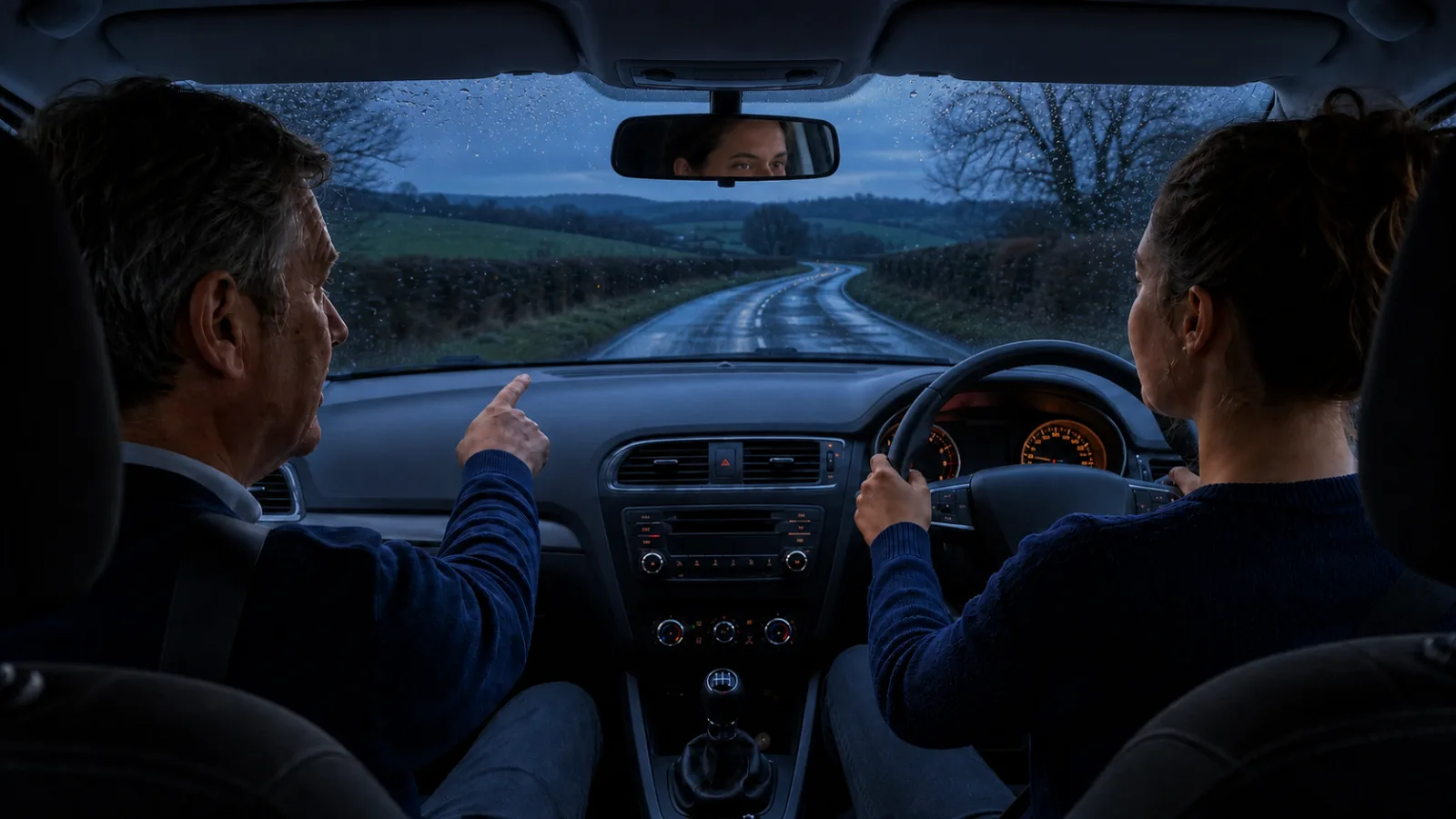
Last verified 3 August 2026 against the official pages linked below.
Pass Plus is a practical driving course of at least 6 hours, split into six modules, with no test at the end, and no official price, because GOV.UK publishes none: fees "depend on where you live, the instructor or driving school and how long your training takes". The official definition is "a practical training course that takes at least 6 hours and is for drivers to improve their skills and drive more safely" (GOV.UK). Whether it is worth your money in 2026 comes down to one question: which gap are you actually filling? If it is motorway confidence, a single targeted lesson may do the same job for less. If it is a cheaper premium, the answer sits with your insurer, not the course. This guide works through both, module by module and pound by pound.
What is Pass Plus and who runs it?
Pass Plus is delivered by ordinary driving instructors, not by examiners at a test centre. GOV.UK is specific: you need "a Pass Plus registered approved driving instructor (ADI)" to teach you, and not every instructor is registered. To check, email DVSA's Pass Plus team at passplus@dvsa.gov.uk with the instructor's name and ADI number. (And yes, it is DVSA that administers Pass Plus, not DVLA, if the two agencies blur together, our DVLA vs DVSA explainer untangles them.)
On timing, GOV.UK says the course "can be taken at any time although it should be most useful to new drivers in the year after passing their test". That first-year framing matters for the money side too: the official insurance guidance tells you to "check with insurers that you can still get a discount if you passed your practical driving test more than a year ago". Take it early, or the financial case weakens even where the skills case holds.
What do the six Pass Plus modules cover?
Pass Plus has six modules, and the official list is short: driving in town, in all weathers, on rural roads, at night, on dual carriageways and on motorways (GOV.UK). "All modules should be practical sessions, although local conditions may mean some are theory based", a motorway session can become classroom-based if there is no motorway within practical reach, and "you'll normally spend at least 5.5 hours driving" out of the 6-hour minimum.
| Module | The driving it targets | Who gets the most from it |
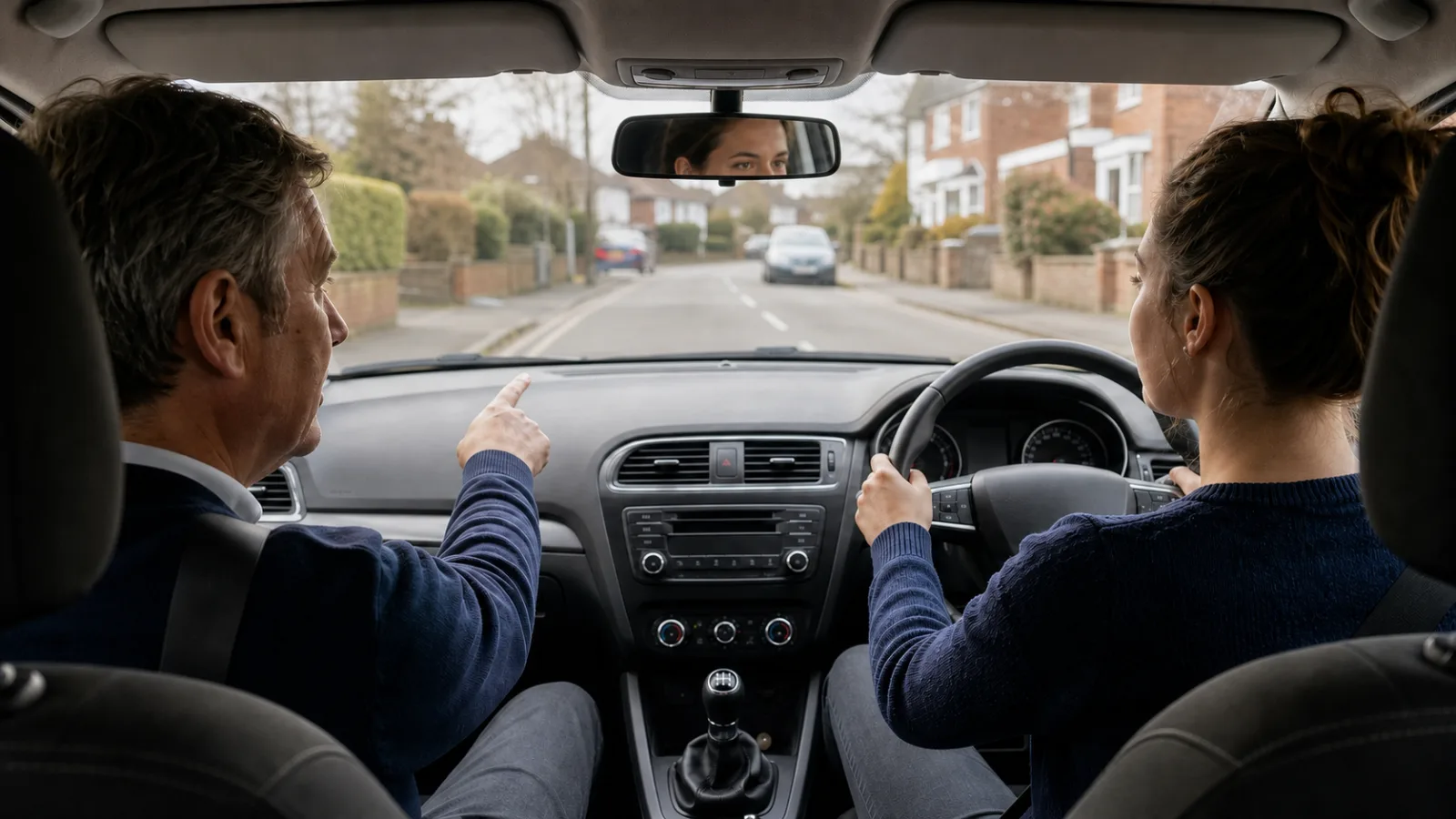
| In town | Busy urban traffic, complex junctions, multi-lane one-way systems | Drivers who learned on quiet rural roads |
| In all weathers | Rain, fog, low sun, ice (adjusting speed and stopping distance | Anyone who passed in a dry, bright summer |
| On rural roads | Narrow lanes, blind bends, unlit stretches, overtaking judgement | City learners who rarely left 30 mph limits |
| At night | Driving in darkness, dazzle and judging speed with reduced vision | Drivers whose every lesson happened in daylight |
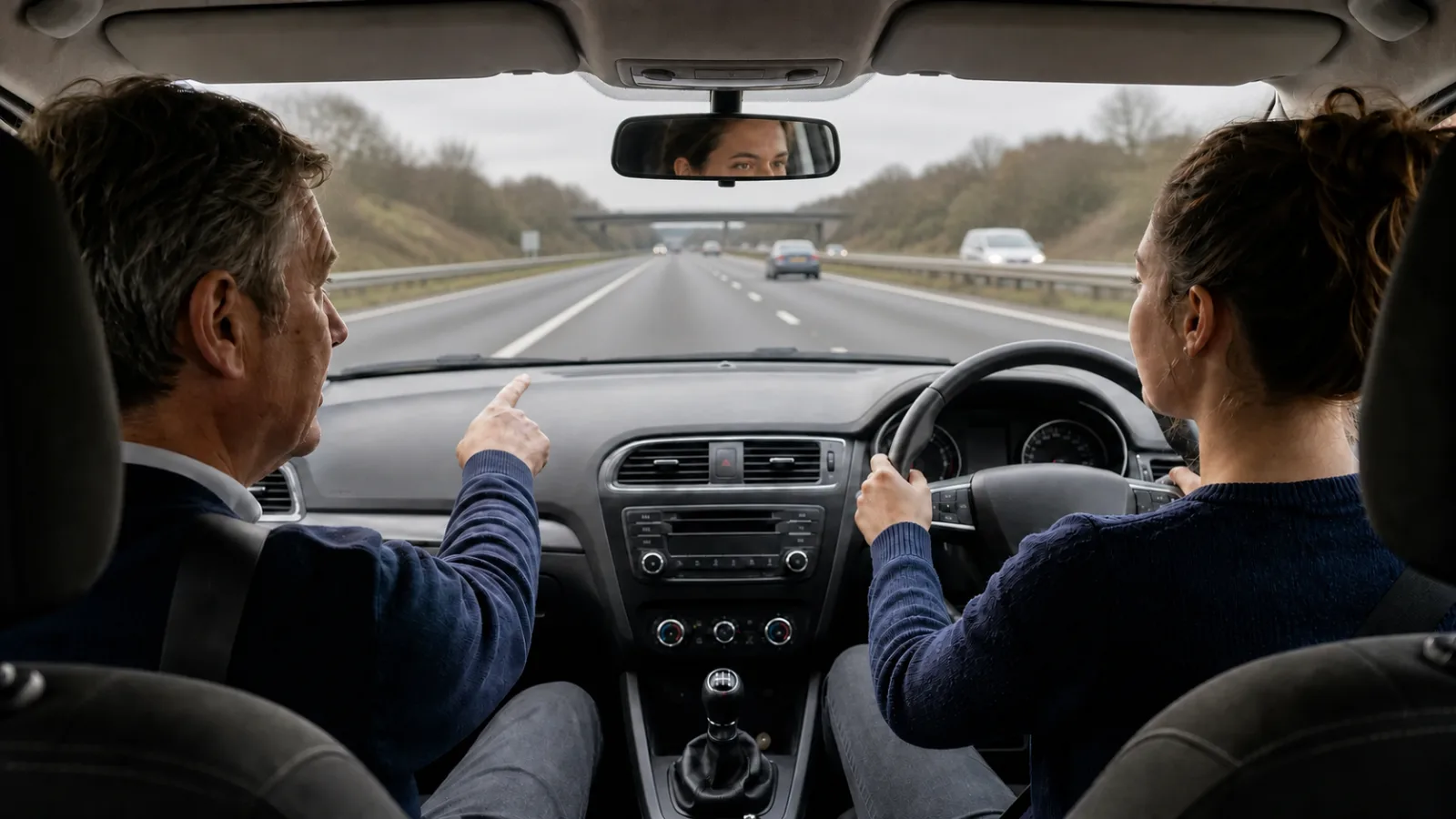
| On dual carriageways | Higher speeds, slip roads, sustained lane discipline | Those whose test-centre area had none nearby |
| On motorways | Joining and leaving at speed, lane discipline over distance | The majority) motorways are not in the practical test |
The motorway module is the headline for most new drivers, because motorways are not part of the practical driving test (GOV.UK). Unless you took motorway lessons as a learner, legal only with an approved instructor in a dual-control car, you can qualify without ever having joined one at 70 mph. And more people are qualifying than ever: the GB practical pass rate reached 50.0% in 2025/26, the highest figure in the recorded series, according to our analysis of DVSA's June 2026 tables. A record share of candidates are becoming full licence holders, on a test that never once saw a motorway.
Is there a test at the end of Pass Plus?
No, and this is the single most misunderstood thing about the course. GOV.UK puts it plainly:
You will not take a test but you'll be assessed throughout the course. To pass you'll have to reach the required standard in all modules.
Your instructor is the assessor, continuously, across all six modules, which also means you cannot cherry-pick: reaching the standard in five out of six is not a pass. Once you have reached it in all of them, the instructor completes a training report form, you both sign it, and you, not the instructor, post it to DVSA at 1 Unity Square, Nottingham NG2 1AY. Your certificate arrives by post, normally within 2 weeks (GOV.UK); chase passplus@dvsa.gov.uk if it does not. Keep it safe, because insurers will want to see it before applying any discount.
How much does Pass Plus cost in 2026?
There is no official price, and that is not an oversight. Instructors set their own fees. GOV.UK says only that "Pass Plus fees depend on where you live, the instructor or driving school and how long your training takes" (booking guidance). The honest mental model: you are buying at least six hours of a qualified instructor's time, so start from your local ADI's hourly lesson rate, multiply by six, and expect a package quote around that arithmetic. Any article quoting a single national "Pass Plus price" is guessing on your behalf.
There is one genuine way to pay less: "some local councils can offer discounts off the full Pass Plus training costs" (GOV.UK), but "you must live in the council's area to be eligible". As of 3 August 2026, the official list names Cumbria, Hampshire County Council and Wiltshire Council in England, plus Argyll and Bute, Fife, Inverclyde and South Lanarkshire in Scotland, and, notably, "all local councils in Wales offer discounted Pass Plus courses". Contact your own council before booking, because schemes open and close without ceremony.
Will Pass Plus actually make your insurance cheaper?
Sometimes, and GOV.UK's own verb is doing a lot of work: Pass Plus "may help you get a car insurance discount if you successfully complete the course". The dedicated insurance page is blunter still: "the amount of discount depends on the insurance company" and "not all insurers offer Pass Plus discounts". There is no standard percentage anywhere in the official guidance, so treat any specific figure you read online as one insurer's offer, not a rule.
Run the decision in this order. First, ask your actual insurer or broker what a Pass Plus certificate would be worth in pounds on your real quote, on your quote, not in principle. Second, compare that saving against the course price your local instructor gives you. Third, weigh the alternatives insurers themselves promote: a telematics (black box) policy prices your driving continuously and rewards evidence rather than certificates, and a clean first year builds a no-claims discount that compounds at every renewal, while Pass Plus is a one-off certificate priced once. Two useful edge rules from GOV.UK: if you do not currently have a car, "you might be able to put the discount on hold for up to 2 years", and if you passed more than a year ago, confirm the discount still applies before you book anything.
Is Pass Plus worth it? Two new drivers, two different answers
Priya is 17, passed in June 2026 and has never driven on a motorway, because no practical test includes one. Her gap is exactly one of the six modules. Option one: the full Pass Plus course, a minimum of 6 hours covering all six modules, ending in a certificate that may unlock a discount. Option two: an hour or two of motorway tuition with any ADI, aimed precisely at slip roads, lane discipline and judging speed at 70 mph. On hours alone, the single lesson closes her named gap in a fraction of the time and cost; the full course only wins if her insurer confirms a discount large enough to effectively pay for the other five modules. One phone call settles which.
Jordan is 22, a confident city driver whose only motive is a cheaper premium. His decision is arithmetic he can do before spending anything: his quote with a Pass Plus discount applied, versus a telematics quote, versus his standard policy. Because the discount "depends on the insurance company" and some insurers offer none at all, the course is an investment with an uncertain return, if his insurer offers nothing, Pass Plus is worth precisely £0 to him in premium terms, whatever it adds in skill. If it offers a real reduction, he can measure payback directly against the price he is quoted.
The pattern is simple: Pass Plus earns its fee when the skills gap spans several modules, or when the insurance maths visibly works on your own quote. It disappoints when bought on autopilot as a rite of passage.
What are the cheaper ways to close the same gaps?
Before the test, most of the Pass Plus syllabus can be rehearsed for the cost of insurance alone. Supervised private practice, with anyone over 21 who has held a full licence for at least 3 years, can pile up town, rural, night and bad-weather miles between lessons; the rules for supervising a learner are strict but simple. The motorway module is the one exception: learners may only drive on motorways in England, Scotland or Wales with an approved instructor in a dual-control car, never with a parent or friend, as our learner motorway guide explains.
After the test, your full licence opens motorways immediately, and a one-off refresher lesson with an ADI targets any single weakness (night driving, dual carriageways, motorways) without committing to six hours. What none of these alternatives provide is the certificate: no Pass Plus certificate, no Pass Plus insurance discount, however much you practise.
Does Pass Plus protect you from the new driver six-point rule?
No, and this is the most expensive myth attached to the course. If you accumulate 6 or more penalty points within 2 years of passing, your licence is revoked, and Pass Plus does not remove points, does not add a buffer and does not shortcut reinstatement. The six-point rule applies to every new driver identically, certificate or not. The honest version of the claim: the training may make you less likely to commit the offences in the first place, but it offers zero legal protection once you have.
Pass Plus begins after your test, but the judgement it builds starts with the theory syllabus you are studying now. Drivings' free mock theory exams reproduce the real 50-question format, and our hazard perception practice clips train exactly the scanning-ahead instinct that the all-weather, rural and motorway modules later stretch at speed. If your test is still ahead of you, that is the gap to close first. Free, and before it costs you a retake fee.
Pass Plus questions, answered
Is there a test at the end of Pass Plus?
No. GOV.UK states "you will not take a test but you'll be assessed throughout the course". Your instructor assesses you continuously, and you must reach the required standard in all six modules to pass.
How much does Pass Plus cost?
There is no set price: fees "depend on where you live, the instructor or driving school and how long your training takes". Budget for at least six hours of instructor time at your local hourly rate, then check whether your council discounts it before you book.
Does Pass Plus guarantee a car insurance discount?
No. The official wording is that it "may help", not all insurers offer a Pass Plus discount, and the amount depends entirely on the company. Get a pounds figure from your own insurer before paying for the course.
Do local councils pay for Pass Plus?
Some offer discounts off the full training cost: every local council in Wales, plus a short GOV.UK-listed set including Cumbria, Hampshire, Wiltshire and four Scottish councils. You must live in the council's area to qualify, so contact yours directly.
Is Pass Plus still worth it after six months of driving?
It can be. GOV.UK says the course is "most useful to new drivers in the year after passing their test", so at six months you are inside the window. The pressing deadline is financial: past one year, some insurers stop offering the discount, so confirm yours before booking.
Can I do only some of the modules?
No. To pass, "you'll have to reach the required standard in all modules". The course is assessed as a whole, and the certificate reflects all six. If you only need one skill, a targeted lesson with an ADI is the honest alternative.
Does Pass Plus help with the new driver six-point rule?
No. Six or more points within two years of passing still means revocation, and a Pass Plus certificate removes no points and offers no protection. It changes your skills, not your legal position.
How do I get my Pass Plus certificate?
Your instructor completes and signs the training report form once you reach the standard, you countersign, and you post it yourself to DVSA in Nottingham. The certificate arrives by post, normally within 2 weeks; email passplus@dvsa.gov.uk if it does not.
How do I check my instructor is Pass Plus registered?
Email DVSA's Pass Plus team at passplus@dvsa.gov.uk with the instructor's name and ADI number. Only a Pass Plus registered approved driving instructor can deliver the course, and registration is not automatic for every ADI.