Theo Bennett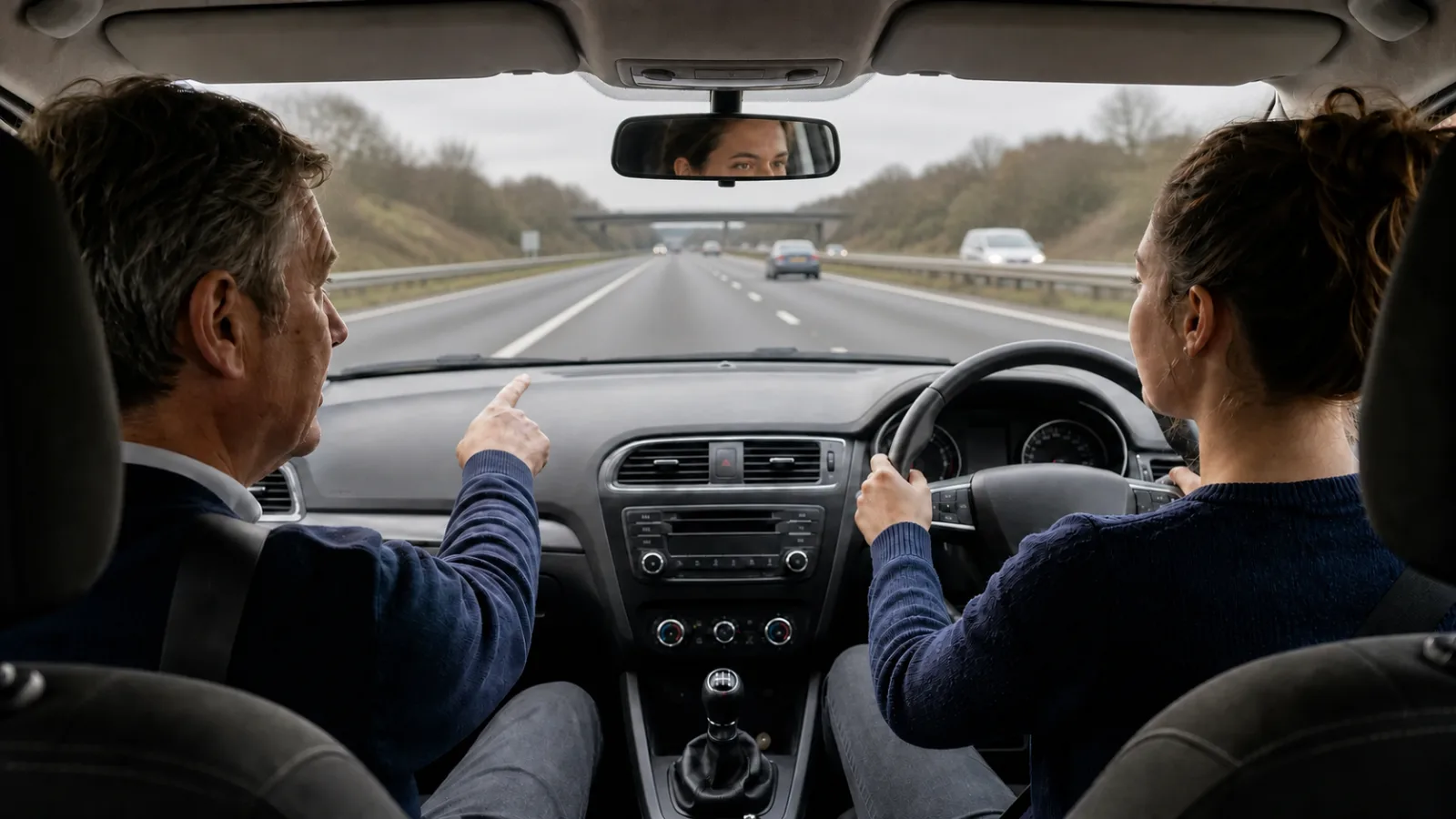
Last verified 3 August 2026 against the official pages linked below.
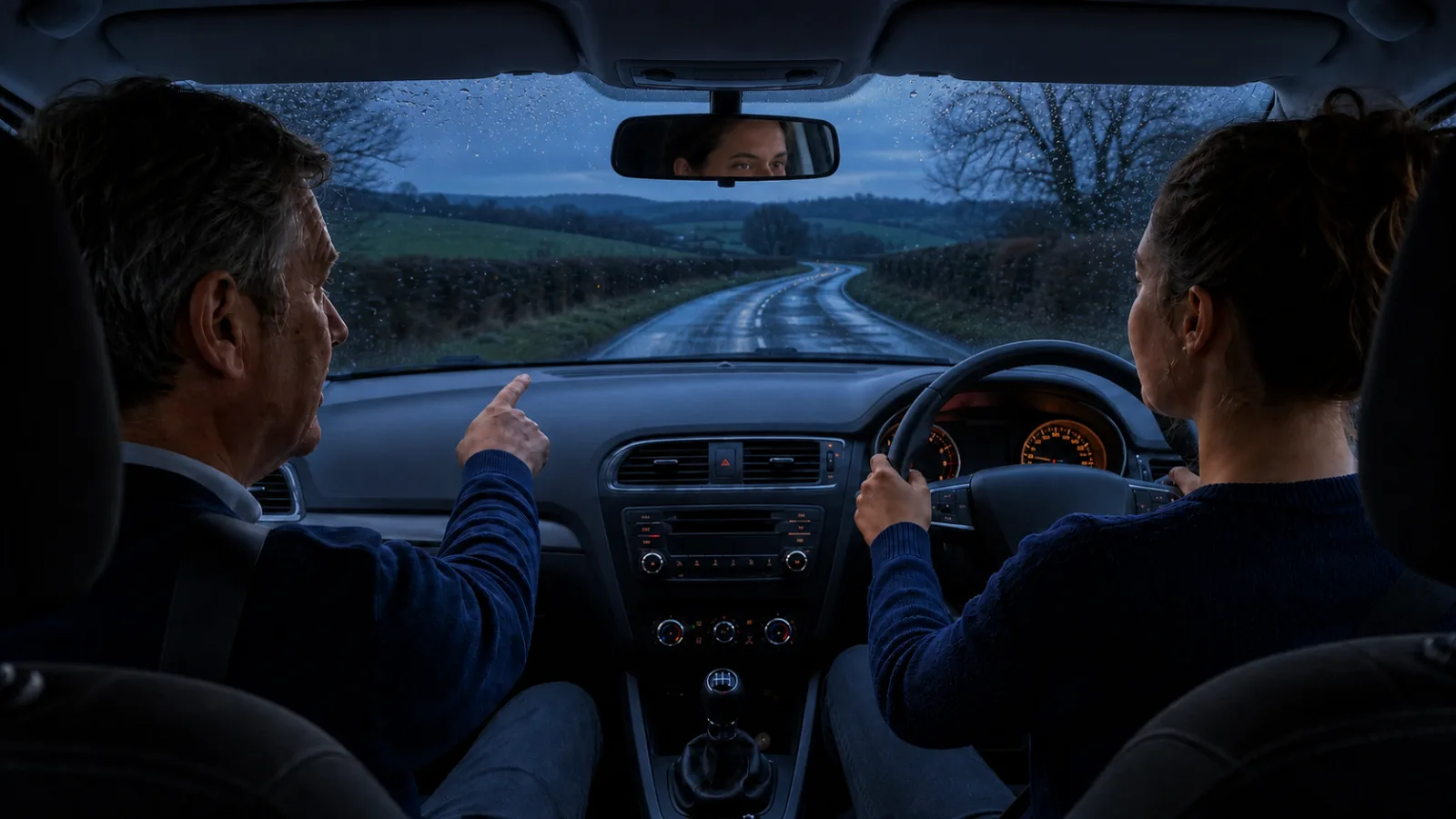
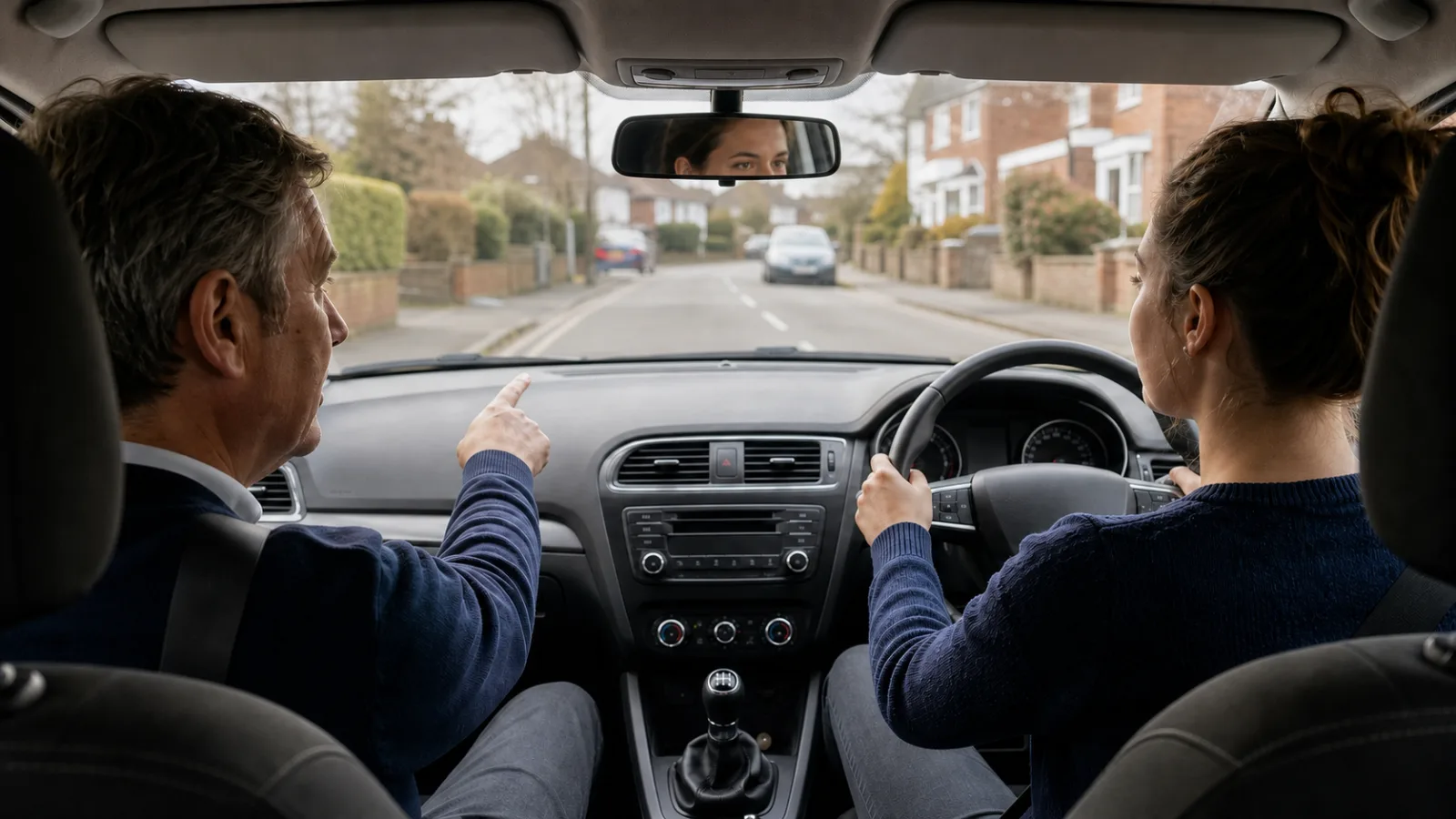
Learner drivers have been allowed on motorways in England, Scotland and Wales since 4 June 2018, but only under three conditions that must all apply at once: you're driving in England, Scotland or Wales, you're with an approved driving instructor, and the car is fitted with dual controls (GOV.UK). Miss any one of the three and the drive is illegal. That rules out private motorway practice entirely (a parent, older sibling or friend in the passenger seat does not make a motorway drive legal, however experienced they are), and in Northern Ireland learners cannot use motorways at all. This guide covers the full picture: the 2018 rule change, what a motorway lesson actually involves, how to decode smart motorway signals, the breakdown procedure, and how to plan your first solo motorway drive once you pass.
You can only drive on motorways if all of the following apply: you're driving in England, Scotland or Wales; you're with an approved driving instructor; the car is fitted with dual controls.
Motorway lessons have only been legal since 4 June 2018
Until 4 June 2018, the motorway was the one road type every British driver met for the first time alone. You passed your test on ordinary roads, collected your full licence, and your first 70 mph slip-road merge happened with nobody beside you. The DVSA changed that: from Monday 4 June 2018, learner car drivers could take motorway lessons with an approved driving instructor in a dual-controlled car (GOV.UK announcement).
The change was deliberately narrow. It applies to car learners only. Learner motorcyclists remain barred from motorways. Trainee driving instructors are not allowed to take learners onto a motorway; it must be a fully qualified ADI. And the lessons were voluntary from day one: it is up to the instructor to decide when a learner is competent enough for them. The public backed the change, over 80% of consultation respondents agreed that learners should be allowed to take motorway lessons with an approved driving instructor (DfT consultation outcome), rather than leaving new drivers to discover those roads solo.
Why does the rule demand an instructor rather than any experienced driver?
Read the rule as a specification and it answers the question itself. The Highway Code's motorway section requires that a provisional car licence holder on a motorway is accompanied by a DVSA approved driving instructor, in a car displaying red L plates (D plates in Wales) that is fitted with dual controls (Highway Code rules 253 to 273). The law demands two safeguards ordinary supervision cannot offer: a professional in the passenger seat, and a physical means for that professional to slow and control the car. So it does not extend motorway access to ordinary supervised practice.
The everyday rules for private practice (a supervisor over 21 who has held a full licence for 3 years, correct insurance and the rest) are a separate regime for ordinary roads, covered in full in our guide to supervising a learner driver. None of it buys motorway access, and practising without the right supervision carries a fine of up to £1,000 and up to 6 penalty points on your provisional licence (GOV.UK).
Will you drive on a motorway in your driving test?
No. Motorways are not part of the practical driving test. The roughly 35-minute drive uses ordinary roads, which can include dual carriageways but never a motorway (GOV.UK). Our walkthrough of what happens in the UK driving test covers everything examiners actually assess.
Motorway lessons are voluntary too. Nothing in the learning process requires a single motorway mile before you pass. That is precisely the argument for booking at least one: it is the only stage of your driving life when the law requires a professional beside you and dual controls under their feet before you can drive Britain's fastest roads.
Northern Ireland is different: learners are barred, and 45 mph applies
The 2018 change never applied to Northern Ireland. The Northern Ireland Highway Code lists holders of provisional car licences among those who must not use motorways at all (nidirect, NI Highway Code rule 253), so a motorway lesson is simply not an option there, with an instructor or otherwise. Learners in Northern Ireland also face a blanket cap: "In Northern Ireland the speed limit is 45 miles per hour when you're learning to drive a car" (GOV.UK). In England, Scotland and Wales there is no learner-specific limit. With L plates the speed limits are the same as after you've passed.
How do you know you're ready for a first motorway lesson?
Your instructor decides, the DVSA built that judgement into the rule itself. And the judgement rests on something concrete: a motorway lesson requires you to already do, consistently, everything a fast dual carriageway demands. Joining from a slip road, holding lane discipline at the national limit, checking mirrors before every change of speed or position, overtaking cleanly and keeping a proper following gap: these are the exact mechanics of motorway driving, just with more lanes and higher stakes.
So the honest readiness test is whether 70 mph dual carriageways feel routine. If they still feel like survival, more dual-carriageway time comes first, and that is one place private practice genuinely helps, because dual carriageways, unlike motorways, are legal with a qualifying supervisor. Our supervising rules guide explains how to run that practice within the law.
What a motorway lesson actually covers
A typical first motorway lesson works through five skills in order:
- Joining via the slip road, building speed to match the traffic in lane one, spotting a gap early and merging without forcing anyone to brake.
- Lane discipline, keeping left unless overtaking, and returning left once you're past.
- Following distance: the Highway Code says to "allow at least a two-second gap between you and the vehicle in front on high-speed roads", at least doubled on wet roads (Highway Code rule 126).
- Overtaking: the full mirror and blind-spot routine, a decisive pass, a measured return to the left.
- Exiting, reading the countdown markers, moving to lane one in good time, then recalibrating on the slip road, where your speed feels far slower than it really is after sustained motorway pace.
Here is how the first of those plays out in practice. On the slip road, your instructor talks you through the merge in stages: look across to lane one early, while you still have slip road left. Use the slip road's length to build up towards the speed of that traffic, which may legally be doing anything up to the 70 mph motorway limit for cars (GOV.UK speed limits). Pick your gap before the slip road runs out, adjusting with the accelerator rather than the brake wherever possible. Check the right blind spot, steer smoothly into the gap, then immediately rebuild your two-second following distance. The whole judgement is speed-matching: arrive at lane-one speed and you only need a modest gap; arrive well below it and you need an enormous one, and you unsettle every driver behind you.
Smart motorways, decoded
Smart motorways manage traffic through overhead signals. Variable speed limits, lane closures, and on some stretches a hard shoulder that opens and closes as a running lane. Other stretches have no hard shoulder at all and provide marked emergency areas instead. Every signal you'll meet decodes into one of a handful of instructions (Highway Code rules 253 to 273):
| Signal | What it means | What you do |
| Red X above a lane | Lane closed: people, stopped vehicles or debris ahead | You MUST NOT drive in that lane; move out as soon as it's safe (rule 258) |
| Speed limit inside a red circle | Mandatory variable limit | You MUST NOT exceed it, whatever surrounding traffic does (rule 261) |
| Amber flashing lights with a temporary limit or arrow | Hazard ahead: queue, incident, fog or spray | Reduce speed and be ready to slow further; don't speed up until past a signal that isn't flashing (rule 257) |
| Speed limit shown above the hard shoulder | Hard shoulder open as a running lane | You may drive in it like any other lane while the limit is displayed (rule 269) |
| No signal, or a red X, above the hard shoulder | Hard shoulder closed to traffic | Don't use it except in an emergency (rule 269) |
| Blue emergency area sign with an SOS phone symbol | Refuge for breakdowns on stretches without a hard shoulder | Stop only in a genuine emergency; use the SOS phone before rejoining (rules 270 and 278) |
The same signals appear in the theory test. Our road signs practice covers the motorway set, and it's far better to make them automatic on a screen than to meet a red X for the first time at speed.
What happens if you break down on a motorway?
In a lesson your instructor manages a breakdown, but the procedure is part of what motorway lessons teach, and the Highway Code sets it out precisely (Highway Code rules 274 to 287). If your vehicle gets into difficulty, leave at the next exit or pull into a service area if you possibly can. If you can't, go left: pull into an emergency area or onto the hard shoulder, stop as far left as possible with your wheels turned to the left, and get out by the side furthest from traffic, waiting behind the safety barrier. If you cannot get out of a live lane, the instruction is unambiguous: stay in your vehicle, keep your seat belts and hazard warning lights on, and call 999 immediately. Leaving an emergency area has one extra step. You MUST use the SOS telephone and follow the operator's advice for exiting (rule 278).
After you pass: plan the first solo motorway drive
Some context from our own analysis of the DVSA's published tables (25 June 2026 release): the GB practical pass rate reached 50.0% in 2025/26. The highest in the recorded series (our practical test pass rate data). Half of candidates now leave the test centre with a full licence, and not one of them has demonstrated a single motorway skill to an examiner. If you skipped motorway lessons as a learner, your first solo motorway drive deserves planning, not improvisation.
Keep the first one small: a single junction-to-junction hop on a stretch you've looked at on a map, at a quiet time of day, with no passengers and no deadline. For structured help afterwards, Pass Plus is a practical training course of at least 6 hours delivered by a Pass Plus registered approved driving instructor; its six modules include motorway driving, there's no test, you're assessed throughout, and completing it may help you get a car insurance discount. GOV.UK says it should be most useful in the year after passing, which is exactly when the motorway gap bites. Our Pass Plus guide weighs up whether it's worth the money. And treat your early months with care generally: the new-driver six-point rule makes penalty points far more expensive in your first two years.
The core motorway skill isn't car control. It's spotting developing hazards seconds earlier than you would in town, because at 70 mph everything arrives sooner. That scanning instinct is trainable before you ever join a slip road: Drivings' hazard perception practice uses video clips of developing hazards to train that spot-it-early habit, so looking far ahead is already second nature by the time your instructor first points you at a slip road, and it sits alongside free mock theory exams and a full practice question bank for the rest of your theory prep.
Learner motorway questions, answered
Can my mum, dad or a friend take me on the motorway to practise?
No: private motorway practice is illegal throughout the UK. GOV.UK states it plainly: "It's illegal for you to drive on the motorway when practising with family or friends" (GOV.UK). The law requires an approved driving instructor and a dual-controlled car, and a supervising parent is neither.
Will I have to drive on a motorway in my driving test?
No: motorways are not part of the practical test. The examiner's route uses ordinary roads and may include dual carriageways, which is as fast as any test gets.
Are motorway lessons compulsory?
No: they are entirely voluntary, and your instructor decides when you're competent enough to take one. There is no minimum number of motorway miles required before your test, or before driving one solo on a full licence.
What speed can learners drive at on motorways?
The same as everyone else, up to the 70 mph limit for cars, unless a lower limit is displayed in a red circle. In England, Scotland and Wales the speed limits when driving with L plates are the same as after you've passed (GOV.UK); the 45 mph learner cap exists only in Northern Ireland, where learners can't use motorways anyway.
What happens if I panic in the middle of a motorway lesson?
Your instructor takes over. That is exactly what the dual controls are legally required for. They can slow the car from the passenger seat, and they will talk you calmly through to the next exit. Panic is a scenario the rule was designed around: you are never more protected on a motorway than during a lesson.
Do smart motorways have hard shoulders?
Not always. Some stretches keep a permanent hard shoulder, some open theirs as a running lane when a speed limit is shown above it, and all-lane-running stretches have no hard shoulder at all. They provide marked emergency areas with SOS phones instead.
Does the car need L plates for a motorway lesson?
Yes: the car must display red L plates (or D plates in Wales) as well as being fitted with dual controls and driven with an ADI alongside (Highway Code rule 253).
Can learner motorcyclists ride on motorways?
No: the 2018 change applied to learner car drivers only. Holders of provisional motorcycle licences are barred from motorways entirely, in every part of the UK.